
Taxon Details
Eriogonum argillosum
clay buckwheat
View Report Copy Link Calflora eFlora CCH CalPhotos iNaturalist

© 2010 Steve Matson |

© 2021 Ryan O'Dell |
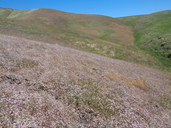
© 2021 Ryan O'Dell |
Taxon Summary:
Eriogonum argillosum, commonly known as clay buckwheat, is a annual herb in the Polygonaceae that is found only in California. It occurs within Cismontane woodland, and Valley and foothill grassland, growing at elevations from 75 to 930 meters. Eriogonum argillosum is ranked 1B.2, Plants Rare, Threatened or Endangered in California and Elsewhere; Moderately threatened in California.|
Scientific Name: Eriogonum argillosum J.T. Howell |
||
|
Common Name: clay buckwheat |
||
| Family: | Polygonaceae | |
| Element Code: | PDPGN080J0 | |
| USDA Plants Symbol: | ERAR9 | |
|
Synonyms/Other Names: |
||
| Name Status: |
JEF, FNA, POWO, IPNI, Tropicos |
|
| CA Rare Plant Rank: | 1B.2 |
| Fed List: | None |
| State List: | None |
| Global Rank: | G3G4 |
|
State Rank: |
S3S4 |
| Other Status: | |
|
CRPR Changes: changed from 4.3 to 1B.2 on 2026-06-12 |
|
| Add Date: | 1974-01-01 |
| Date Edited: | 2026-06-12 |
| Lifeform: annual herb | ||||||||||||||
Blooming Period: Mar-Jun
|
||||||||||||||
|
Elevation:
75 - 930 meters 245 - 3050 feet |
||||||||||||||
General Habitats:
|
||||||||||||||
| Microhabitat Details: Clay endemic, found in areas where competition with non-native plants is reduced, such as landslides (clayslides). Sometimes on sandy clays. | ||||||||||||||
Microhabitat:
|
||||||||||||||
|
Notes: Serpentine previously included in general habitat based on one specimen record from SCL Co. collected "on a clay slope that is related to serpentine" (Clifton 23190, DAV); now considered extirpated from SCL Co. and no other occurrences have been documented on serpentine or serpentine-derived soils. |
|
|
Threats: Threatened by development, urbanization, agriculture, and competition from non-native plants. |
|
|
Taxonomy: Sometimes confused with E. angulosum (which has an un-ribbed, hairy involucre and glandular hairy perianth vs a ribbed, glabrous involucre and glabrous perianth in E. argillosum) and E. ordii (which has a densely hairy perianth vs a glabrous perianth in E. argillosum). |
|
| Threat List Total: | 0 | |
| Total EOs | % of EOs | |
| EOs with Threat Listed: | 0 | 0 % |
| THREAT LIST: | ||
|---|---|---|
| Total Occurrences: | 0 | ||||
| Element Occurrence Ranks: | |||||
|---|---|---|---|---|---|
| A | B | C | D | X | U |
| 0 | 0 | 0 | 0 | 0 | 0 |
| Occurrence Status: | |||||
|---|---|---|---|---|---|
| Historical >20 Years | 0 | ||||
| Recent <=20 Years | 0 | ||||
| Presence: | |||||
|---|---|---|---|---|---|
| Presumed Extant | 0 | ||||
| Possibly Extirpated | 0 | ||||
| Presumed Extirpated | 0 | ||||
| California Endemic: | |||||||||||||
| California Island: | |||||||||||||
|
States: Name (Code) California (CA) |
|||||||||||||
|
California Counties and Islands: Name (Code) |
|||||||||||||
|
Quads: Name (Quad Code) |
|||||||||||||
Notes:
|
|||||||||||||
Map
Location Data is Forthcoming from the CNDDB
 Presumed Extant
Click on quad for name. Hold Shift Key to use mouse scroll wheel